Who we are
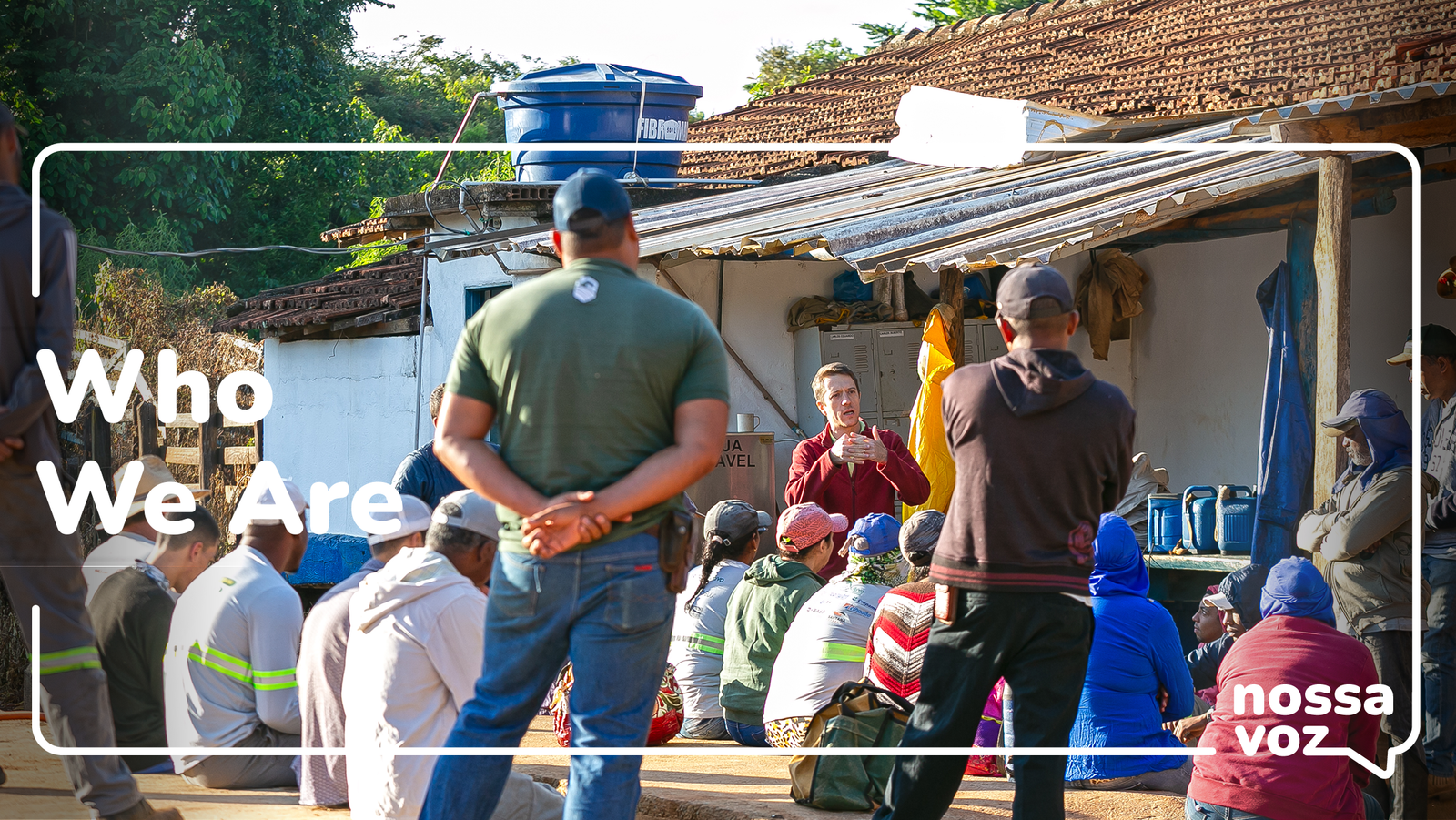
We are a grievance mechanism implemented in Brazilian supply chains that meets the requirements of international Human Rights Due Diligence (HRDD) laws, the standards set out in the United Nations Guiding Principles on Business and Human Rights, and the Due Diligence Guidelines for Responsible Business Conduct of the Organization for Economic Co-operation and Development (OCDE).
Nossa Voz is also a pioneering initiative worldwide, offering an accessible and free helpline for workers, as well as effective technical support to the productive sector to prevent human rights violations and provide fair remediation of labor irregularities.
Our history
In October 2021, the Global Fund to End Modern Slavery received funding from the TIP Office of the United States Department of State to implement the CAFE program (“Comprehensive Action towards Forced Labor Eradication”), aimed at promoting decent work in the coffee supply chain.
Also in 2021, GFEMS selected LRQA as a sub-grantee to develop and implement the grievance mechanism, given its 15 years of experience in the sector, having implemented more than 10 mechanisms across various geographies for 2 million workers.
The pilot project included, among other objectives, the development of a grievance mechanism for the coffee sector, aligned with international Human Rights Due Diligence (HRDD) standards.
In Brazil, the implementation of the project involved extensive consultation with local and international partners, including government, the private sector, workers’ organizations, civil society, survivors of conditions analogous to slavery, and academia. Based on this engagement, a grievance mechanism model was developed grounded in the United Nations Guiding Principles on Business and Human Rights, with emphasis on Principle 31, which addresses effectiveness criteria for non-judicial grievance mechanisms (such as company reporting channels, mediation, or sectoral initiatives). These criteria are:
- Legitimacy
- Accessibility
- Predictability
- Equity
- Transparency
- Rights compatibility
- A source of continuous learning
- Based on engagement and dialogue
The mechanism, named Nossa Voz, was built on these principles to operate in an accessible way for workers, with its primary interaction channel being WhatsApp, a widely used application across Brazilian society. Nossa Voz was implemented by LRQA, which coordinates the setup and operation of the helpline, as well as the analysis of data generated through its use.
The initiative was designed as a helpline in which operators ensure humanized, real-time interaction with users.
The pilot phase was implemented starting in 2023, when companies, cooperatives, and farms within the coffee supply chain joined the initiative and were able to witness its benefits for workers and producers, as well as its contribution to increasing social compliance at the end of the supply chain.
Interactions with Nossa Voz have taken place since then, on the one hand enabling support and information for workers and, on the other, helping producers mitigate social risks.
With the support of Instituto Trabalho Decente, preventive work was carried out in regions that recruit seasonal workers for the coffee supply chain, in partnership with municipal governments in five cities in the state of Bahia. The initiative resulted in the training of more than 150 public officials in decent work and provided guidance to more than 120 seasonal workers on their rights and duties.
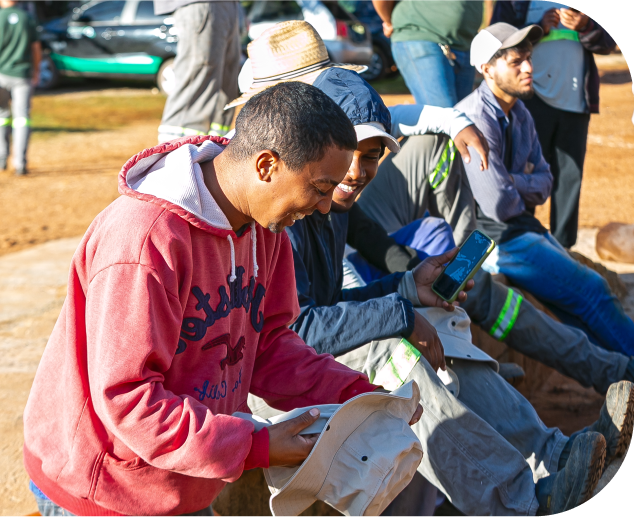
Still within the pilot scope, throughout 2024 the tool continued to be improved, leveraging new partners and expanding preventive work in workers’ regions of origin, with Nossa Voz serving as a source of continuous learning and an initiative effectively based on engagement and dialogue, in line with the United Nations Guiding Principles.
Designed to serve as a benchmark for various rural supply chains, Nossa Voz now stands out as a helpline that can be expanded to other economic sectors, helping more and more workers and the productive sector to thrive together, contributing to the achievement of the United Nations Sustainable Development Goal 8: to promote sustained, inclusive and sustainable economic growth, full and productive employment, and decent work for all.
In 2025, LRQA fully assumed coordination of the work with the coffee sector, working with companies and market partners to secure funding to continue and sustain the project, which is no longer financed by the U.S. government. LRQA owns the helpline, applying experience gained over 15 years with such mechanisms. During this period, LRQA has implemented several helplines and currently operates eight of them across multiple continents, reaching more than 2 million workers daily.
Mission, Vision and Values
Mission
To promote decent work in Brazilian supply chains through social dialogue and active listening to workers and the productive sector.
Vision
To be an accessible, effective, and legitimate initiative for listening to Brazilian rural workers, aligned with international Human Rights Due Diligence requirements and standards, and promoting social well-being across supply chains.
Values
Institutional support
which entities support the initiative and what they do (national and international bodies)
Nossa Voz is a multi-stakeholder initiative, coordinated and implemented by LRQA, aimed at making Brazilian supply chains a benchmark in social sustainability and the realization of decent work.
Implementation and coordination

Institutional partners

LRQA also leads the expansion strategy with the private sector, presenting Nossa Voz to partners and stakeholders interested in joining the initiative, such as producers, cooperatives, commodity traders, and multinational agribusiness companies.
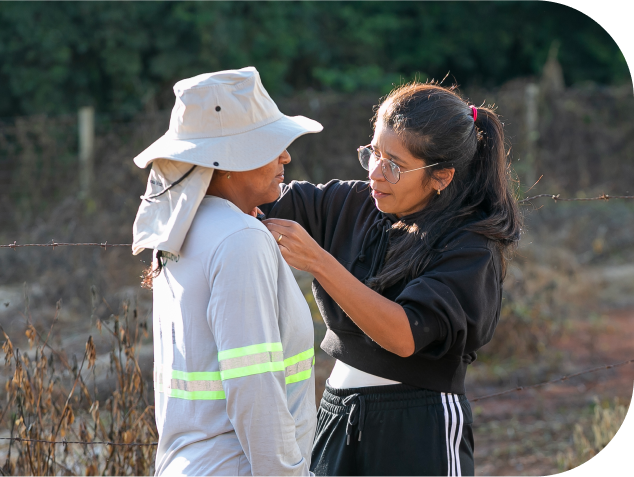
Worker training, conducted on-site at each participating farm, is also coordinated by LRQA. The goal is to fully equip workers with knowledge about what Nossa Voz offers, overcoming potential resistance or barriers related to digital literacy.
LRQA has solid experience in the design, implementation, and operation of grievance mechanisms. Altogether, LRQA’s helpline ecosystem reaches more than 2 million workers across over 2,500 factories, properties, and farms worldwide. LRQA operates cross-sector grievance mechanisms in eight countries: Bangladesh, China, the United States, India, Indonesia, Malaysia, Pakistan, and, through Nossa Voz, Brazil.
For more information about LRQA’s other helplines, please contact thiago.chiessi@lrqa.com.

In Brazil, the Platform has been active since 2012 and has more than 40 members and strategic partners. Its role is to mobilize and engage stakeholders to collaborate collectively in a pre-competitive environment to advance sustainability in the coffee sector.
It is composed of eight regional centers located in South America, Central America, North America, West Africa, Central and East Africa, Southern Africa, Europe, and Asia. Each center is responsible for contributing to the organization’s global strategies, as well as developing and implementing its own program strategy.
This organizational structure was designed to maximize international cooperation for development, capacity, transparency, performance, and impact.